Along for the Ride: Lessons from a Season of Transition

Along for the Ride: Lessons from a Season of Transition

The other day my pastor, Wes, made a comment that stopped me in my tracks. He said something about finally being through the transition. His words landed deep, because for the first time in a long time, I realized he was right. He made the comment in the context of Grace Church where we have been through successive transitions in leadership and structure over the past few years. But I began to think about the transitions in my own life, and smiled…the endless season of upheaval, grief, and change I’d been living in for years had finally given way to something steadier.

If you had told me five years ago what this stretch of life would hold, I’m not sure I would have believed you. These years have carried some of the deepest grief, some of the hardest transitions, and some of the sweetest surprises of my life. And yet, on the other side, I’ve emerged with a deeper maturity, a steadier confidence, and a freer joy than I ever thought possible. So I’ve been looking back. What follows is organized not chronologically, but thematically in a smorgasbord of consciousness:

When Coping Runs Out

In 2020, I finally hit a wall. Years of ministry stress, combined with the advent of the pandemic and my own lack of mature coping mechanisms, caught up with me. I felt burned out, exhausted, and hollow inside. I was a successful pastor by outward appearance, but behind closed doors I was an absent father and a pretty awful husband. For too long, I thought I could white-knuckle my way through—that I could “push on” and ignore what my soul was trying to tell me. But eventually, I couldn’t outrun myself anymore. That’s when I finally reached for therapy.

Going to therapy was one of the most humbling decisions of my life, but it has become a lifeline. It gave me language for what I was feeling, tools for resilience, and permission to name my own humanity. That season taught me something I should have known but didn’t: strength isn’t pretending you’re fine—it’s admitting when you’re not. It was the beginning of transition, and I didn’t know how many more were coming.

Loss and Grief

Just as I was beginning to recover, 2021 brought a blow I never saw coming. My dad died suddenly at 58. We knew we were beginning a cancer journey, but the rapid decline and spiral could not be prepared for. His death ripped open layers of grief, anger, unfinished conversations, and regrets that still make me walk with a limp.

Then, in 2024, my Papa died. He was the finest man I’ve ever known, and all my best stories start with him. His passing was expected, but it ushered in something unexpected: the realization that I had become the patriarch of my family, there is no “elder” to look to. I didn’t ask for that role, and truthfully, I still feel unqualified for it. But it is the mantle I now wear. In both losses, I’ve learned that grief doesn’t vanish—it reshapes you. It’s another kind of transition you don’t choose, but one you live into.

A Surprising Gift

In the middle of the grief came joy we never anticipated. In 2022, we welcomed our third child, Evangeline—the gift we never knew we wanted. Parenting had already been stretching and sanctifying, but this new little life expanded our hearts in ways we didn’t anticipate. God knew what we needed more than we did.

And yet, parenthood brought its own trials. This past year has been especially hard as our daughter Evie has faced successive illnesses, including a terrifying week in the hospital with viral sepsis. Sitting in that hospital room, watching her tiny body fight so hard, stripped away every illusion of control I thought I had. It was raw, exhausting, faith-testing. But it was also holy. Those days reminded me that my job as a father is not to hold everything together but to entrust my children to the One who loves them even more than I do.

Ministry Dreams Derailed

Around the same time I began therapy, another grief was unfolding: the denomination that formed and molded me was unraveling. The drama, the fighting, the uncertainty—it all collided with my growing sense that the ministry I had once envisioned for myself was no longer possible in Illinois. I had to lay down that dream. Leaving felt like losing not just a church but my identity.

And yet, in the letting go, God was clearing space for something new. A painful but necessary transition.

Finding Home Again

In 2023, our family relocated to Southwest Florida to serve at Grace Church. It was a fresh start for our family in more ways than one. For two years, I led at the Central Campus, where my task was clear but weighty. It was a joy to watch that little church find itself again and grow in phenomenal ways fueled by the Holy Spirit. By God’s grace, in July, I had the joy of handing off leadership to Pastor Kip. That moment was both holy and healing. There is something deeply freeing about completing a hard assignment and knowing you’ve left it healthier than you found it. Another transition complete.

A New Voice, A New Tribe

Now I find myself at home again. I’ve rediscovered my voice as a preacher, writer, and leader. I am discovering that the voice I lead with is the most authentically “me” that I’ve ever experienced. I’ve also embraced a surprising identity as the team’s “resident churchman”—someone who loves the beauty, history, and rhythm of the Church and wants to keep in front of us the goal of holding tightly and proudly to our Wesleyan heritage as we move forward. The best part is that I don’t have to try to climb any sort of ladder, real or imagined. I just have to be me. I am enough and what God has done in my life is the superpower that I bring to the team. 

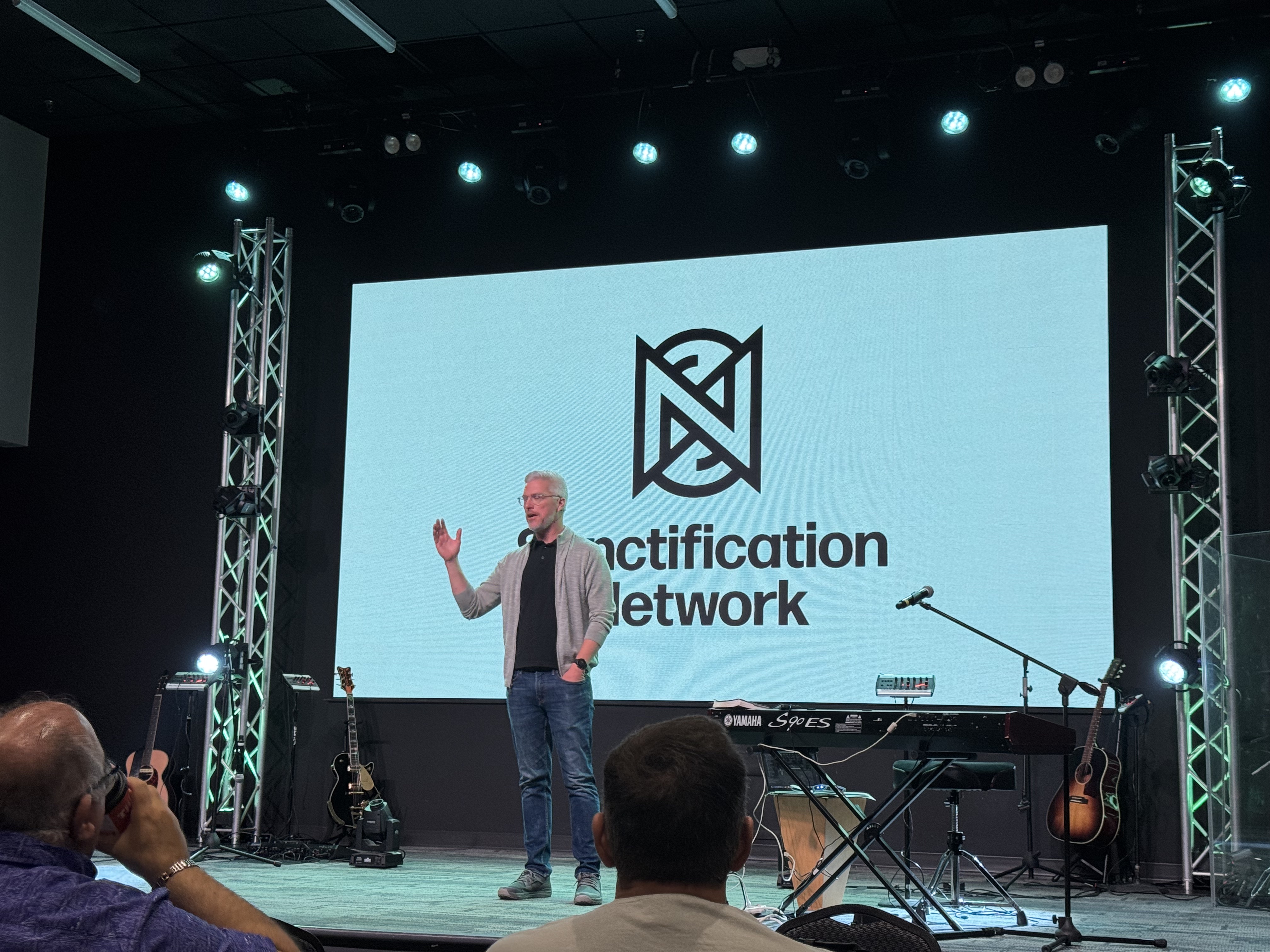
I’ve also found a tribe in the Sanctification Network: a movement committed to disciple making in the Wesleyan spirit. Though leaving my denomination was painful, this community has reminded me that Wesley’s vision is alive and well.

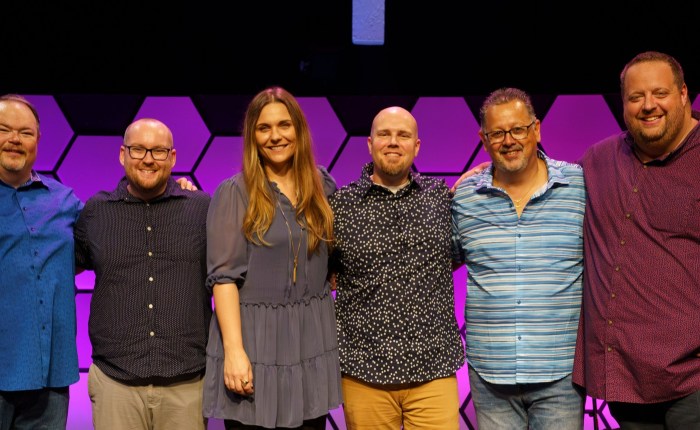
And I have not walked any of this alone. God has given me a band of brothers—Wes, Taylor, and Taylor—who have become companions in ministry and in life. Their friendship has softened the grief of leaving old circles behind and made transition not just survivable but fruitful.

From Student to Professor

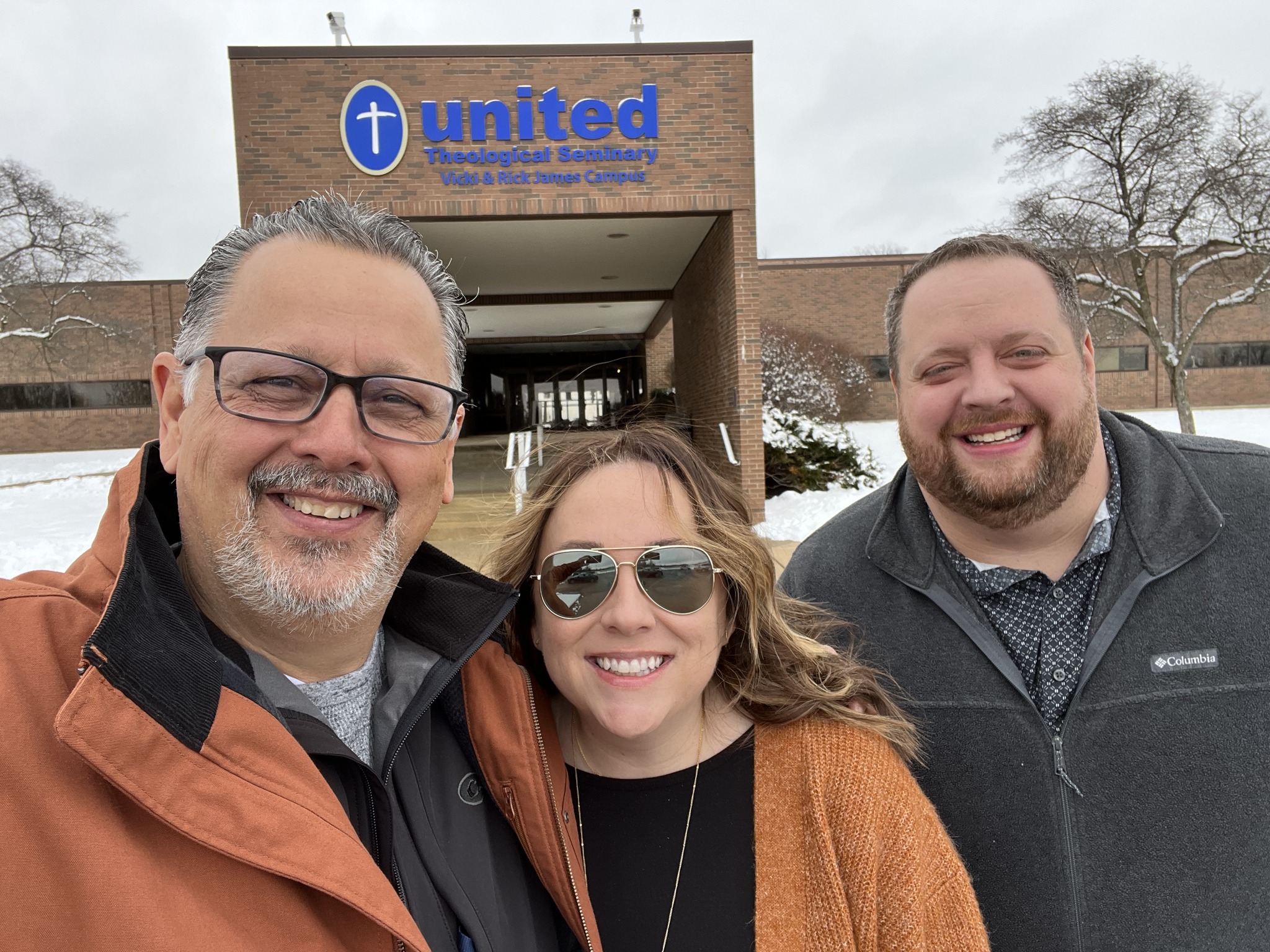
Another transition has been vocational and academic. After years as a doctoral student, I’ve stepped in as adjunct faculty with United Theological Seminary, mentoring future doctors of the church. Moving from student to teacher has been humbling and energizing. It’s a reminder that ministry isn’t just about what I pour into my local church—it’s also about investing in the broader body of Christ and shaping leaders who will shepherd in different contexts.

Stronger, Freer, Healthier

Looking back, these years have been marked by burnout, therapy, grief, birth, illness, denominational strife, relocation, leadership challenges, death…but also new beginnings, and new callings. Any one of those transitions could have undone me. Taken together, they have reshaped me. Looking back, I can confidently say “I can do hard things!”

So when Wes said we’re finally through the transition, I realized he was naming something true. The storm has settled. The pieces are coming together. I’m no longer just surviving transition—I’m living from it.

And here’s the testimony I now give: I am stronger, more mature, more confident in Christ, and more free and joyful than I have ever been.

I know more transitions will come. That’s just life. But I’m learning to loosen my grip and ride the waves. Because every transition—every loss, every change, every new beginning—is an invitation. An invitation to grow, to trust, and to discover new dimensions of grace.

And I’m just along for the ride.
Finding My People

Finding My People

Exiting the United Methodist Church was one of the most difficult decisions I’ve ever made. The systems, relationships, and sense of connection that had been a part of my identity for over two decades were gone. While I did my very best to leave well, I still found myself removed from some Christmas card lists and suddenly deleted on social media. Though I believe my departure was necessary, and there was an undeniable sense of God’s timing and calling, it left me feeling, for lack of a better word, tribeless. It wasn’t just about leaving a denomination—it was about losing a broader sense of belonging. Being one of the pastors at Grace Church is an incredible gift, offering me a supportive team and place to serve, but there has been a gap that I haven’t quite been able to fill. I missed the broader connection, the feeling of being part of something larger that stretched beyond the walls of my local church. I previously had a deep network of colleagues, and while we didn’t always agree on everything and found ourselves in meetings that could have easily been emails, a friend of mine often quipped “forced collegiality is still collegiality.” I missed that. I have been passionate about renewal across the entirety of the Wesleyan movement, and suddenly felt on an island. 

In short, I have craved a sense of connectedness not only with my local community but with others who share the same heart for God’s movement across the broader church. 

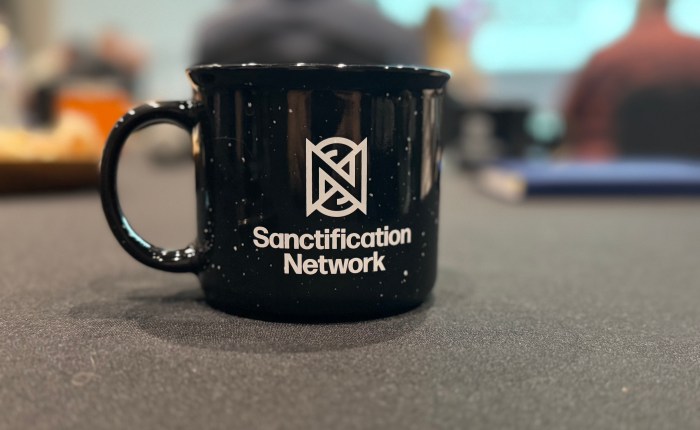
Fast forward to this week, when I had the opportunity to officially become a part of The Sanctification Network, of which Grace Church is a part. I’ve been looking forward to this opportunity for quite some time. Ironically, I almost didn’t make it. On Sunday afternoon, I got hit with a 24-hour bug and briefly considered staying at home. God was so merciful in bringing healing and energy to get in the car and head to the gathering. Thankfully, I only missed lunch and introductions and walked in during opening worship. 

I write this with tears…I felt like I had walked in the door of home after an extended absence. This was my tribe. The three days were incredible. There was an unmistakable sense of unity—something I hadn’t felt in quite some time. I was surrounded by some of the most effective pastors and leaders I’ve known, but what stood out wasn’t their titles or positions, their church size or budgets. It was their desperation for God, their shared hunger for a fresh outpouring of the Holy Spirit, and their complete alignment around a mission that was greater than any one individual, local church, or denomination. Together, we represent some phenomenally vital congregations, but there was not a single hint of competition in the room, rather a spirit of cooperation. 

The atmosphere was charged with a sense of expectation. There was a genuine yearning for God to move in a new way that transcended old divides and bring us closer to the heart of the Father, the mission of Jesus Christ, and the empowerment of the Spirit. It wasn’t just talk—it was an embodied faith, a unity that I have yearned for but not found. This was the broader connection I had been missing. 

This wasn’t just another gathering—it was a family. A family with a deep and shared commitment to living out the call of holiness and “championing a movement of disciple-making in the Wesleyan way, for the renewal of the local church.” These were my people, envisioning “a movement that exponentially generates passionate spiritual disciples and leaders, spreading scriptural holiness, for the loving transformation of our world.

As I reflect on this experience, my heart is full of gratitude—not only for Grace Church, where I pray the Lord allows me to serve for the rest of my ministry career, but for the broader Wesleyan-Methodist movement. This network isn’t confined to one denomination or expression of Wesleyanism. The Sanctification Network “is a relational connection of local churches and leaders who are devoted to making more and maturing disciples of Jesus in the Wesleyan heritage. The network is a healthy collection of churches and leaders from different denominations and independent churches.” Simply followers of Jesus in the Wesleyan tradition coming together with a shared heart and mission. And in that unity, there is strength.

Listen, my colleagues in ministry: If you have ever felt the way I did—disconnected, longing for something more, or searching for a spiritual family beyond your local church—I encourage you to explore The Sanctification Network. There is something powerful happening here, and it’s way beyond just programs or leadership structures. It’s about the Holy Spirit breathing new life into the broader church, bringing together those who are hungry for revival, renewal, and scriptural holiness.

The Sanctification Network is for anyone in the Wesleyan family who desires to be part of something bigger, something deeper. If your heart is as our heart, consider joining us in this movement.

I invite you to visit The Sanctification Network and learn more about what God is doing. If you’re seeking a place where mission, unity, and a hunger for God’s presence come together, you may just find the spiritual home you’ve been looking for. 

Reach out to me if you’d like to chat.

Passing The Light: Mentoring Lessons from Elijah, Elisha, and John Wesley

This is an article I authored that originally appeared in Wesleyan Accent in August, 2024.

“We transfer this mantle from our generation to the young, indicating that the responsibilities of the older generation will be caught up and carried on by the young, and that the spirit of today’s Elijahs will rest on today’s Elishas.” Nearly a decade ago these words rang across the retirement service as a retiring elder handed me a symbolic lantern.  

I had been selected by my peers as the ordinand to “receive the mantle” and carry on the light from the retiring class. I’ll admit I had often tuned out of that particular service, often opting for coffee with friends. But when it came to the moment for me to actually receive the lantern and hear those words, I felt the full weight of the handoff. That day 31 gifted and dedicated pastors were retiring, collectively representing over 950 years of service to Christ and His Church. I imagined all the sermons preached, the lives changed, the baptisms, funerals, and weddings. I thought of all the joy lived out in their churches, all the hard transitions and moments of grief. And with the passing of a lantern, over 950 years of combined ministry was symbolically passed to 4 newly ordained elders. 

The lantern felt heavy in my hands as I barely squeezed out my response, “we who come after you say, may we receive a double portion of your spirit.”


Photo Credit: IGRC Communications, 2016.

The emotion of the moment pierced me as I realized that given the state of the world, and of the church, we were going to need at least a double portion. That day was a confirmation in my spirit we needed a new way to operate.  Much of my training for ministry set me up to be a solo-heroic leader. I needed mentors. I needed to mentor others. This has become a drumbeat for my life and ministry ever since. 

In wrestling for a way to share this idea of calling wrapped up in mentorship with my church, I found direction in 1 Kings. The Biblical story of Elijah and Elisha offers a beautiful narrative on mentorship and handoff, emphasizing the deep, transformative relationship needed for spiritual maturity. This narrative, intertwined with John Wesley’s emphasis on communal spiritual growth and accountability within micro-communities, reveals the enduring power of mentoring in nurturing a committed, maturing faith. 

Elijah and Elisha: A Model of Spiritual Mentoring

The relationship between Elijah and Elisha serves as an exemplary model of the mentoring relationship. Elijah, a powerful prophet of God, had been used by God in powerful and dramatic ways to purge the land of Baal worship. After defeating the prophets of Baal on Mt. Carmel (1 Kings 18), an act that in Elijah’s eyes should have been the final triumph over idol worship, Elijah finds himself pursued by Queen Jezebel (1 Kings 19:1-2). In God’s goodness, Elijah is cared for (nap and a snack, amen?), and shown how his calling would play out in the next phase of God’s unfolding plan. Elijah learns that he would soon be used in less dramatic, more subtle ways. In other words, Elijah had to accept the reality that while he was a part of God’s plan, he was not the plan (1 Kings 19:3-18). God’s ultimate triumph over Baal worship would be accomplished through the intentional (and rather unremarkable) act of prophetic succession. 

Elijah is told to anoint Elisha as his successor. And without much explanation, Elijah throws his cloak over Elisha, signifying the transfer of prophetic authority and an invitation into a new way of life (1 Kings 19:19-21). This simple moment marks the beginning of an intimate and transformative relationship. 

Elisha’s own journey of being mentored by Elijah would be characterized by learning, observation, and deep discipleship. Elisha faithfully serves and follows the elder Elijah, witnessing his prophetic ministry while growing in his understanding of his own call. The relationship is about far more than passing on knowledge; it is about Elisha experiencing and embodying the ministry of a prophet. The climactic moment of their relationship is when Elijah is taken to heaven in a whirlwind, and Elisha receives that double portion (2 Kings 2:9-12). This is the culmination of their mentoring relationship, with Elisha now fully equipped to continue the work of God begun by his spiritual father. 

John Wesley and the Power of Group Mentoring

For all that is made of John Wesley’s genius in innovation, perhaps the most valuable facet was his grasp of communal spiritual growth and accountability. Group mentoring in societies, classes, and bands were foundational elements to the early movement. These groups were designed to foster spiritual maturity through mutually practiced accountability, prayer, and the study of Scripture. Those early methodists saw that true spiritual growth and preparation for a life of ministry happened best within the context of community, where all members were supported and challenged in their faith journeys. 

In these groups, the mentor (class or band leader) would guide and support individuals in their spiritual formation. Through teaching biblical truth and modeling a life of holiness, they helped those in their care navigate the challenges of life, discern God’s will, and apply scriptural holiness to their daily lives. 

These groups were the secret sauce of the Methodist-Wesleyan movement. Francis Asbury, reflecting on these groups, referred to them as “our universities for the ministry.” Wesley himself believed that the neglect of this group mentoring experience would tear at the fabric of the entire movement:

Never omit meeting your class or band; never absent yourself from any public meeting. These are the very sinews of our Society; and whatever weakens, or tends to weaken, our regard for these, or our exactness in attending them, strikes at the very root of our community.

Wesley’s approach to communal spiritual growth and mentoring aligns with what we read of Elijah and Elisha’s relationship. Both the biblical account and the group model of Wesleyanism emphasize the importance of close, personal relationships in nurturing spiritual maturity in mentoring relationships.

Mentoring: Handing Off Deep, Transformative Faith and Leadership

Mentoring, as illustrated by Elijah and Elisha and emphasized by Wesley’s practices, is not merely the impartation of knowledge. It involves nurturing deep, transformative relationships that foster spiritual and emotional maturity and a deeper commitment to following the call of Jesus. A true mentor invests time, energy, and resources into the mentee, guiding them along the way. 

This time of relationship requires vulnerability, trust, and a willingness to be shaped by the wisdom and experience of another. For Elisha, following Elijah meant leaving his former life behind and embracing a new identity. In much the same way, members of Wesley’s groups were challenged to live out their faith authentically and transparently within their communities. 

The impact of such mentoring relationships extends beyond the spiritual and leadership growth of an individual. It plays a crucial role in the development and expansion of faith-sharing movements, like World Methodist Evangelism. Elijah’s mentoring of Elisha ensured the continuity of the prophetic ministry in Israel. Elisha’s subsequent ministry, while quite different from Elijah’s, showed the effectiveness of Elijah’s guidance. 

In the case of the early Methodists, Wesley’s emphasis on small groups and communal accountability and mentoring led to a vibrant and growing movement. The strength of the movement lay in its ability to cultivate committed disciples who were in turn equipped to lead and mentor others, multiplying the impact of the gospel. 

This type of relational investment not only deepens discipleship, but also enhances effective evangelism. Mentored individuals are equipped to articulate their faith, engage in faith-sharing, and invite others into a similar journey. 

With every handoff, we hold in tension remembering one’s own calling while at the same time embracing the handoff to those coming behind. When I think of someone who has done that well, I think of Rev. Dr. Maxie Dunnam. As a young pastor, I knew Maxie as someone who was working tirelessly for renewal in the Wesleyan way. Several years ago, we happened to be at the same conference in Chicago. One evening, we were waiting for dinner and I took the opportunity to say thanks for working so hard for a better Church for my generation and that I realized that I was standing on his shoulders. I’ll never forget his reply, “Larry, I may not get to see the whole thing, but you will. I get to hand it off to you.” 

Later, through Flame Fellows, I got to spend a year being mentored by Maxie. In preparation for a sermon titled ‘Handoff’, I wondered if Maxie even remembered that conversation in Chicago. So we had a zoom chat about it and I shared the last few minutes of our conversation with Grace Church. (You can view the sermon here  -the conversation with Maxie is at the very end). 

If not for mentors like Maxie (and several others) who have invested in my life, I would not be the follower of Jesus, pastor, husband, or father that I am. I am grateful for my current mentors who continually push me to be the best version of me I can be. And in these days, I take very seriously my responsibility to be that person for others. In a recent staff meeting, our Executive Pastor and I had a wonderful realization that at 40 and 37 years old, respectively, we are among some of the older staff. We must pour into our Elishas as they hone their own call and leadership style.

In a world increasingly dominated by individualism, the biblical and Wesleyan models of mentorship remind us of the profound importance of community, accountability, and relational investment in nurturing faith and calling. The time to act is now; we cannot afford to wait until a retirement ceremony to pass the torch to the next generation.

Here’s some practical steps:

Become a Mentor:
If you have experienced the transformative power of a mentoring relationship, consider becoming a mentor yourself. Reflect on the wisdom and experiences you have gained and seek out those who might benefit from your guidance. Whether it’s within your church, workplace, or community, your investment will make a significant impact.

Seek Out Mentorship:
If you are seeking to grow in your faith and leadership, find a mentor who can guide and support you. Look for someone whose life and ministry inspire you and approach them with humility and openness. Express your desire to learn from their experiences and be ready to commit to the journey of growth.

Join or Form Small Groups:
Small groups are the heartbeat of communal spiritual growth. Join an existing small group at your church or consider starting one. These groups provide a safe space for mutual accountability, prayer, and study of Scripture. They are fertile ground for mentoring relationships to flourish.

Invest in the Next Generation:
Identify potential leaders within your community and invest in their development. Create opportunities for young people to take on responsibilities, learn from experienced leaders, and grow in their faith. Encourage them, support them, and let them know that you believe in their potential.

Commit to the Handoff:
The handoff is not a one-time event but a continuous process. Commit to regularly assessing and renewing your mentoring relationships. Stay engaged, be adaptable, and continually seek ways to support and empower those you mentor.

By embracing the call to mentor and be mentored, we can ensure the continuity and vitality of our faith communities. The church is too precious, and our calling too significant, to wait any longer. Start the handoff now. Let’s build a legacy of faith and leadership which will endure for generations to come.

Who are your Elijahs? Reach out to them and express your gratitude. Who are your Elishas? Begin investing in their journey today. Together, let’s light the way forward.

Embracing the New Wine: Reflections on the Changing Landscape of Ministry

Embracing the New Wine: Reflections on the Changing Landscape of Ministry

This is an article I authored that originally appeared in Wesleyan Accent in March, 2024.

“In the crushing, in the pressing

You are making new wine

In the soil I now surrender

You are breaking new ground…”

New Wine by Hillsong Worship

My story of crushing and pressing really began in the middle of the pandemic. That’s when I gradually realized that the seminary training I received no longer aligned with reality. The U.S. Church faced successive shockwaves – COVID, the tragic death of George Floyd, a tumultuous general election, January 6, and more. One of my mentors describes those days as marked by disease, disaster, disorientation, and division. The fallout exposed the fault lines in most churches, including my own shortcomings as a leader and follower of Jesus.

For nearly 15 years, I served as a pastor, climbing the “leadership ladder” with zeal. A few years ago, I found myself as the Lead Pastor of one of the larger churches in my conference. I thrived on metrics like average worship attendance and professions of faith. Everything seemed to trend upward until it didn’t. It all abruptly changed. The division stemming from polarizing events made it challenging to sustain congregational unity. Beloved members left the church. Many chose alternative activities over Sunday morning services while we operated solely online. Many never returned.

The limitations of the attractional church model, which I was trained to implement, became glaringly apparent. Regardless of the soaring music or meticulously crafted sermons, attendance didn’t rebound. Beautiful buildings, student ministry programs, affinity groups, classes, and bible studies lost their effectiveness. As I grappled with this realization, I came to understand that the future church would not be the same I encountered as a 14-year-old new believer.

I initially resisted change, echoing Mr. Wesley’s tension toward the established church of his era. Wesley was simultaneously committed to its structure while acknowledging its need for renewal. In his Letter from Dublin in 1789, he wrote, “In religion I am for as few innovations as possible. I love the old wine best.”* But this wine was no longer good for the table.

I began to press into what it would look like for tradition and innovation to coexist. In my research on church structure and strategy, I leaned into an approach of “both/and.” Could there be a sacred synthesis of attractional and incarnational, established and emerging, all existing together?

This journey led to an awakening in my spirit. The emerging church in our context could look more like field preaching of Wesley’s day than anything else. While the Sunday morning gathering remains relevant, church in pubs, coffee shops, breakrooms, under shade trees, and in homes also finds its place. Yes, there will be vocal detractors. However, the misconception lies in viewing established churches and emerging forms as mutually exclusive; they can and should coexist, enriching and shaping one another to share the gospel in diverse contexts.

I still find some of these more innovative ways of doing and being church strange, so I continue to find great comfort that John Wesley was still uncomfortable with field preaching many years after its beginning. He would write in his journal, “What marvel the devil does not love field preaching? Neither do I – I love a commodious room, a soft cushion, an handsome pulpit. But where is my zeal if I do not trample all these under foot in order to save one more soul?”** Two decades of field preaching and he still had difficulty reconciling the practice. Still, Wesley was willing to embrace it as he saw the gospel reach people.

Last June marked a significant change for my family as we departed from the familiar confines of our state and the denomination we had always called home. We bid farewell to the “commodious room” and “handsome pulpit” to embark on a new journey as part of the pastoral team at a multisite church located in southwest Florida. Here, the principles of attractional and missional converge seamlessly. Our Sunday gatherings are vibrant, drawing in many souls. Yet, amidst the effectiveness of traditional ministry programming, I find myself engaging in more and more field preaching. Nowadays, this entails sitting on a sidewalk, sharing a simple bottle of water with a homeless couple, lending an ear to someone’s story, or assisting them in finding their way to detox. It involves sharing a meal and embracing individuals whose lives and perspectives differ vastly from mine. These endeavors provide the same gospel space as the pulpit on Sunday morning. 

My affection for traditional brick-and-mortar churches remains unwavering. There’s undeniable passion and vitality in that model. However, I’ve come to realize that the future of the church, especially in reaching new people, lies in smaller, more adaptable structures grounded in authentic relationships. 

Reflecting on Christ’s command to spread the gospel, I invite you to ponder with me the sacrifices we must be willing to make (trample under foot) in order to make room for reaching even one more.

The new wine is worth it, can we make this our prayer?

“Jesus, bring new wine out of me…

‘Cause where there is new wine there is power

There is new freedom

And the Kingdom is here

I Lay down my old flames

To carry Your new fire today.”

Letter from Dublin, June 20, 1789, The Letters of the Rev. John Wesley, A.M., ed John Telford (London: Epworth, 1931), 8:145.

** John Wesley, Journal and Diaries IV, (1755-1765), ed. W. Reginald Ward and Richard P. Heitzenrater (Nashville, TN: Abingdon Press, 1992), 21:203.

An April Fool…Just a Day Late

An April Fool…Just a Day Late

April 2 is a significant day in the history of the Methodist/Wesleyan movement. It was on April 2, 1739, that our spiritual ancestor, John Wesley, made a fool of himself. He would write in his journal, “At four in the afternoon I submitted to be more vile, and proclaimed in the highways the glad tidings of salvation…” This was Wesley’s first venture into field preaching.

John Wesley certainly stands out in the annals of religious history for his innovation and adaptability. However, his journey into field preaching and continued practice of it was anything but straightforward. Instead, he embraced it reluctantly, challenging his own preconceptions about ministry, order, and the nature of the Church.

Field preaching wasn’t his brainchild, though he infused it with his unique approach. He was distinctive in how he systematized field preaching into his entire method of ministry. His initial entrance to field preaching was spurred by external pressures, including a growing number of pulpits that were closed to him, as tension grow with the Anglican establishment.

George Whitefield, a fellow member of the Oxford Holy Club, played a pivotal role in Wesley’s embrace of field preaching. But it wasn’t easy. Despite his persistent invitations, including no shortage of flattery, Wesley hesitated due to reservations about preaching outside of established parish churches. Whitefield had seen a great response to field preaching with his over-the-top style. Wesley didn’t even respond to Whitefield’s first invitation. So George poured on the compliments, writing to Wesley in March 1739:

“If the brethren after prayer for direction think proper, I wish you would be here the latter end of next week [for] many are ripe for bands. I leave that entirely to you—I am but a novice, you are acquainted with the great things of God. Come, I beseech you; come quickly.”[1]

Again Wesley didn’t immediately respond, but as he found more doors of the established church closed, he reluctantly accepted the invitation.

John arrived on March 29, just in time to hear Whitefield preach. He would reflect in his journal:

I could scarce reconcile myself at first to this strange way of preaching in the fields, of which he set me an example on Sunday, having been all my life (till very lately) so tenacious of every point of relating to decency and order that I should have thought the saving of souls almost a sin if it had not been done in a church.

As quoted above, just a few days later, Wesley decided to lay aside his decency and become a fool as he preached in the field. Several thousand listeners came, and the Methodist field preaching movement was birthed. The genius of this approach was that it wasn’t confined to traditional settings; it could occur anywhere, providing those outside the church repeated opportunities to hear the gospel.

John Wesley Preaching From His Father’s Tomb.
Alfred William Hunt (1830–1896), Mid to late 1800s.

Unsurprisingly, this innovation faced criticism from within the established church. Critics contended that field preaching undermined parish clergy and evoked politically disturbing associations. Despite these challenges, Wesley defended the practice vehemently, driven by its undeniable effectiveness in reaching the unchurched.

Wesley’s commitment to field preaching remained steadfast throughout his life. He viewed it as a necessary response to the established church’s shortcomings in reaching the masses. Despite his personal discomfort with the practice, Wesley recognized its potential to save souls and fulfill God’s calling.

Field preaching became an integral part of the Methodist movement, with Wesley preaching to thousands and establishing societies wherever he went. This practice wasn’t isolated but connected to a broader ecosystem of discipleship, where the early Methodists could nurture and mature their faith.

In essence, Methodist field preaching wasn’t merely a deviation from tradition but a strategic innovation designed to fulfill a Kingdom mandate. Wesley’s reluctance transformed into resolute commitment, underscoring the transformative power of adapting to meet the evolving needs of ministry.

And perhaps, no, definitely, it’s time for us to become a bit more foolish in our approach to ministry. I recently authored an article for Wesleyan Accent in which I reflected on the challenges faced by traditional church models in the midst of our current cultural moment. Though I love the established church, I recognize the limitations of the attractional model and see the growing need for innovation to meet the evolving needs of our world.

In no uncertain terms, I am advocating for a union of both established and emerging forms of church, rather than a divisive separation. Let’s not forget that Wesley himself integrated innovations like field preaching within the disciple-making framework of the established Church of England. This notion of what I call a “sacred synthesis” is crucial in navigating the complexities of modern ministry.

Allow me to illustrate this concept with a glimpse into the dynamics of my primary campus at Grace Church, Central, situated in the heart of Midtown, Fort Myers. Once a thriving upper-middle-class neighborhood, the area underwent a drastic transformation with the departure of the Boston Red Sox from their spring training stadium nearby. What remains is a neighborhood plagued by poverty, addiction, and homelessness.

While our Sunday services at Grace Church Central are undoubtedly vibrant, they alone are insufficient to address the multifaceted challenges of our community. Hence, we’ve embraced modern-day field preaching—innovations designed to meet both physical and spiritual needs, fostering potential connections with the established church.

This approach manifests in various initiatives, such as our weekly lunch gatherings at the Loving the 239 Center, a community hub born from the remodeled youth house. Here, homeless individuals gather for more than just a meal; they find a sense of belonging and spiritual nourishment that has recently led to spontaneous worship and prayer.

Similarly, our Monday night worship service caters specifically to those battling addiction, offering a path to recovery intertwined with a deepening relationship with Jesus. Or the monthly community breakfast, that feels strangely like church as lives are shared over eggs and bacon. Or a monthly diaper distribution for struggling families that has all the signs of becoming a healthy and vibrant ministry sharing way more than diapers. And then there are the seemingly small gestures—learning a homeless person’s name, offering water, engaging in conversation—each a seed of compassion sown in the fertile ground of human connection.

Consider the story of a family of six who, in the midst of housing and job uncertainties, found solace and support at Grace Church. Their journey began with a chance encounter at a local parade, where our simple act of offering free hot dogs in our parking lot left an indelible mark of warmth and acceptance. When it all came crashing down, they came back to the place where “strangers treated us like family.”

These narratives underscore the transformative power of adaptive ministry, where acts of kindness and genuine engagement serve as conduits for the gospel message. It’s a call to embrace innovation, challenge entrenched norms, and venture beyond the confines of traditional ministry models.

So, I urge you to reflect on your own ministry journey. Where is God leading you to step outside the familiar and embrace the unknown? How can you become a beacon of hope and authenticity in an ever-changing world? Embrace the discomfort, for it is in our willingness to become “more vile” that we discover the true essence of Christian service.

Happy April Fools’ Day…one day late.


[1] “Letter from George Whitefield to John Wesley, 22 March 1739”, quoted in Jackson, Offering Christ, 67.


Holy Wednesday

Holy Wednesday

So this one didn’t take two years to write…look at me go!

As we journey through Holy Week, each day holds profound significance in the Christian narrative leading up to Easter Sunday, right?…right?

Much like Tuesday, I don’t think I’ve ever attended a Holy Week service particular to Wednesday. So I did some digging, and one of the traditions around this day is “Spy Wednesday.” Sounds like a great movie, right?

Actually, Spy Wednesday, is a day marked by the bitter sting of betrayal. In the Gospel accounts, this day stands as a stark reminder of the human frailty and the depth of Jesus’ sacrificial love.

Holy Wednesday is distinguished by the betrayal of Jesus by one of his closest companions, Judas Iscariot. For thirty pieces of silver, Judas agreed to hand Jesus over to the religious authorities, setting in motion the events that would culminate in crucifixion.

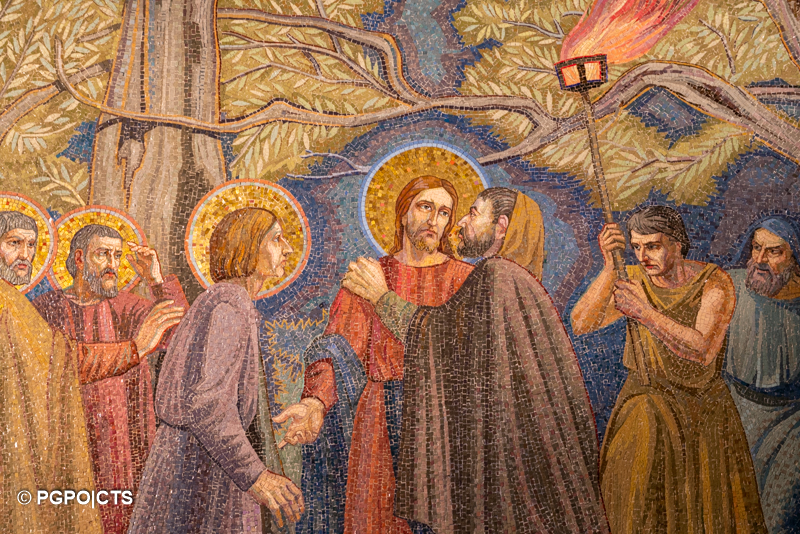
Reflecting on this betrayal brings to mind a haunting visit to the Church of All Nations in Jerusalem, situated in the Garden of Gethsemane. The ambiance of solitude within its walls, coupled with vivid frescoes depicting biblical scenes, particularly struck me. Among them, a painting portraying Judas’ betrayal gripped my attention.

Creator: Gianfranco Pinto Ostuni | Credit: Custody of the Holy Land
Copyright: © Gianfranco Pinto Ostuni/CTS

The scene looks as if all hell is about to break loose…and that would be true. Yet what captivated me most was the poignant mix of sadness and determination in Jesus’ eyes. On this day, we remember Judas’ conscious decision to betray his Rabbi, the man he had journeyed with for three years and once revered as the awaited Messiah.

The very notion of betrayal strikes at the core of human nature – the capacity for treachery, greed, and moral weakness.

The story of Judas serves as a mirror to our own lives, prompting us to examine the ways in which we may betray the trust of others or turn away from the path of righteousness. It compels us to confront uncomfortable truths about our own vulnerabilities to temptation and sin.

Yet, amidst the darkness of betrayal, there shines a beacon of hope – the determination on the face of Jesus I mentioned before.

In the face of betrayal, Jesus remained resolute in his mission. He did not retaliate with bitterness or vengeance but met betrayal with grace and forgiveness. His response serves as a powerful example of love triumphing over evil. It is a love that knows no bounds, a love that willingly lays down its life for the sake of others.

As we lean deeper into this Holy Week, take time to examine your own heart. Are there areas of your life where you have betrayed the trust of others? Have you allowed greed, pride, or selfishness to sit in the driver’s seat?

But also be reminded of the hope that springs forth from the darkness of betrayal. Through Jesus’ sacrificial love, even our most grievous sins can be redeemed and forgiven. As we journey towards the cross this Holy Week, may we be ever mindful of the immense love that led Jesus to lay down his life for us, and may it inspire us to live lives marked by faithfulness, integrity, and love.

In the midst of betrayal, may we find solace in the arms of our Savior, who knows our weaknesses and loves us unconditionally. May we be transformed by his love and empowered to walk in his footsteps, sharing his love and grace with a world in need.

Holy Tuesday

Holy Tuesday


It’s been two years in the making, but here we are with part 2 of my Holy Week series! If you haven’t checked out part 1 about Holy Monday yet, make sure to give it a read here.

The events of the first Holy Week have always been points of curiosity for me. Palm Sunday makes sense. The cleansing of the temple on Monday? Sure thing. The Upper Room, the Lord’s Supper, washing feet, and the agony in the garden on Thursday, I get. The trial, the Via Dolorosa, “It is finished.” That’s Friday. The silence of Saturday. The glory of Sunday.

But what about Tuesday and Wednesday? There’s no great liturgy for those days.

Let’s talk about Tuesday.

According to the New Testament, there’s a actually a few signifiant events that likely took place on Tuesday, including:

  1. Jesus Teaching in the Temple. As he continued to teach in the temple, he engaged in debates with the religious leaders. Notably, he called out their hypocrisy.
  2. The Plot Against Jesus. Of course, his teachings caused the religious leaders to intensify their efforts to silence Jesus.
  3. The Anointing at Bethany. The timing of this event isn’t actually mentioned in the Gospels, but some scholars suggest that this may have happened on Tuesday. My colleague, Rev. Wes Olds, preached a killer sermon on this event a few weeks ago. You can watch it here. “Extravagant love leads to extravagant gratitude.”
  4. The Olivet Discourse. This is a significant teaching found in all 3 of the synoptic gospels (Matthew 24, Mark 13, and Luke 21).

It’s the Olivet Discourse that I’d like to camp on in this post. Take a look at Matthew’s telling of this teaching.

I think there’s really something here for followers of Jesus, especially as we meditate upon the events of Holy Week. As we navigate the complexities of life, we often find ourselves confronted with uncertainty, turmoil, and unrest. This is certainly true in our world, and our inner world. Recently I’ve been faced with my own uncertainty, turmoil, and unrest when it comes to some family issues. People and relationships that always seemed unchanging now seem quite uncertain, and I’m anything but at rest. As far as the world “out there”…just flip on the news, need I say more? I attended a rather contentious school board advisory committee meeting last night that took about 5 minutes to devolve into name calling and yelling…turmoil, unrest, uncertainty.

This teaching is particularly poignant to me because I should have just returned from the Holy Land, but was unable because of the continuing war. And war is where Jesus starts.

Jesus begins by warning his disciples about the signs of the times—wars, famines, earthquakes, and persecution. These events, he explains, are but the beginning of birth pains. In our own lives, we may encounter trials and tribulations that shake us to our core. Yet, just as a woman in labor experiences pain before the joy of childbirth, so too do our struggles give birth to growth, resilience, and spiritual maturity.

Amidst the chaos and uncertainty, Jesus invites his disciples to stand firm in their faith. He warns them of false prophets and false messiahs who will deceive many. In our world, we are bombarded with conflicting messages and ideologies vying for our allegiance. “Give your money here!” “Vote for me!” “Do this, Don’t do that!” “Be on the right side of history!” Yet, as followers of Christ, we are called to anchor ourselves in the unchanging truth of God’s Word, discerning wisely and holding fast to our faith.

Jesus emphasizes the importance of remaining vigilant and prayerful in anticipation of his return. He likens this state of readiness to that of a homeowner who stays awake to prevent a thief from breaking in. I think of this every time I set the alarm system on our home…odds are no one is going to break in, but we should be ready. Likewise, we are called to be spiritually awake and alert, fervently seeking God in prayer and aligning our hearts with his will.

As I journey through life’s uncertainties, I find great hope and strength in the promise of Christ’s return. Though the world may tremble and kingdoms may fall, though things may get worse before they get better (Jesus says they will) his kingdom stands firm and unshakable. In him, we find our refuge, our anchor, and our hope.

This Holy Tuesday, cling to Jesus, embracing faith amidst uncertainty, standing firm in your convictions, and remaining watchful in prayer. For in Christ, we find the strength to endure, the courage to persevere, and the hope of eternal glory.

As we reflect on Holy Week, may we be reminded of the never-ending faithfulness of our Savior, who walks with us through every trial and triumph. And may we, in turn, walk boldly in faith, trusting in the promises of God and eagerly awaiting the glorious return of our Lord and King.

In the midst of life’s storms, cling to the words of Jesus: “ Heaven and earth will disappear, but my words will never disappear.” (Matthew 24:35).

I’m Home

I’m Home

It’s been awhile, blogosphere. And this may be more word vomit than anything profound, but I’m riding this wave, so hang with me for a minute.

Sunday was a long and emotional day.

First, it was my first Sunday leading at the Cape Coral Campus. That’s enough to exhaust even the most seasoned pastor. Three phenomenal services with only a half-hour in-between each one. Now, I’m used to multiple services; throughout my entire ministry I’ve had at least two services each Sunday (sometimes in different locations). But since moving to Grace Church, I’ve been a bit spoiled with having just one service at the Central Campus (sleeping in, early lunch, early naptime…you get it). So Sunday was a sudden plunge back into the old routine. It was great, exciting, and…tiring. It was so good to finally meet a lot of the Grace Church folks at the Cape Campus. They had all heard my name and knew about me…my office is at the Cape Campus and I jump in to all sorts of things…they just hadn’t seen me on the platform on a Sunday morning. So it was good to meet people so they could put a face to the name and say, “hey, he’s one of our pastors, too.”

Second, we got to ordain three new elders for Grace Church. One of the strange new realities of being an independent church is that we credential our own pastors. I appreciate so much that Grace Church has put an immense amount of thought into how credentialing works. We’ve tried to make clear at every turn that we have no intention of leaving our Wesleyan/Methodist heritage even as our denominational affiliation has changed. I think the ordinations were a way to showcase that. We showed a video before the ordinations tracing the “ordination family tree” of our currently ordained pastors. I made the stinkin’ video and I still teared up at each service as I watched the screen turn from John Wesley, to Thomas Coke, to Francis Asbury, on and on, until finally it reached Jorge, Wes, and me. I stand in a wonderful heritage.

We ordained Taylor Brown, Casey Culbreth, and Taylor Foley as elders in the church. They are all 3 incredibly gifted pastors and it was my distinct honor to lay hands on them as they were ordained.

Finally, the really bittersweet part of the day was experiencing Jorge’s last day as one of the pastors at Grace Church. He’s stepping into a new season of writing, coaching, and speaking. He’s not moving, so he still gets to be my Papi. But, man was it emotional over the past couple of weeks to have a front row seat to the impact he’s had on this church over the past 27 years. God used him so well here. I’d heard it before, but it hit differently sitting in the sanctuary to hear him say that on his first Sunday there “were less than 300 people and $29.16 in the bank. Plus we owed $1.25 million on the sanctuary.” To sit there and look around that room Sunday, knowing that Grace Church is debt free and there are a couple thousand people that call Grace Church their Church across 3 campuses and several fresh expressions…just wow!

The most poignant moment at all 3 services was when Jorge “passed the mantle” to Wes as the Lead Pastor of Grace Church. He symbolic passed the mantles of prayer and shepherding to Wes. It was great and holy all 3 times. At the last service, however, I had this profound experience with God. As we surrounded Wes and prayed over him as our Lead Pastor, I snuck a look around the group praying. I was filled with profound gratitude for the foundation we’ve inherited from Jorge’s 27 faithful years at Grace, and for his influence on my life. I looked at my hand on Wes’ back and thought, “I’ve got his back.” I’ve grown to love Wes deeply in these few months and I’m so excited for this next season at Grace Church with him leading the way. Then I snuck a look over at Taylor, Taylor, and Casey. Together, we represent the next generation of pastors at Grace. I don’t know many others as effective as those 3. In the two months I’ve been here they’ve welcomed me as a colleague and friend and haven’t treated me like the new guy.

As I stood there, I was struck with an incredible sense of peace. The 4 of us standing behind our Lead Pastor as we head into a new and hope-filled future. I thought, “I’d proudly charge the gates of Hell with these people. This is my tribe.” Then the tears started to flow as I had another, very simple thought…”I’m home.” At home in an incredible church with my family by my side. At home with this incredible team that accepts me and loves me and sees far more in me than I see in myself. I’m home.

Home is a loaded word for me. Of course my home is where Brittney and the girls are. But I’m always bumping against the childhood trauma of “home.” And for pastors, home can be an interesting concept. For 15 years, home was where the Bishop discerned I was to serve. Even in the best case scenario, like the past 5 years in Tremont, there was always a sense of being a resident but not at home. I’m not even sure if that makes sense. Like, “yeah I’m the pastor, but this isn’t my home church.” Now, I don’t know what the future holds and how God may move…but Sunday, for the first time in a long time…maybe ever…I realized I am exactly where I’m supposed to be.

In our beautiful little house. In my daily commute down palm tree lined streets. In my office. In the meeting rooms where we dream and plan and work. At Grace Church. I’m home.

The Franks are on the Move

The Franks are on the Move

I made the announcement in worship on February 19 that our family’s time in Tremont and Illinois is coming to an end. On July 1, I will become one of the pastors at Grace Church in Cape Coral, Florida. Grace Church is a dynamic multisite church with campuses in Cape Coral, Fort Myers, and Fort Myers Shores.

Anyone that knows us, knows how much Brittney and I love the coast. It has always been our plan to retire to the beach one day, so we’re really excited to get this opportunity now instead of later. We’d be lying, though, if we said this hasn’t been a bit of a whirlwind…that a door has opened that we didn’t know would open. Brittney and I are in awe of how God’s hand has been all over this, how He has prepared us for this move in a way that only He could. We wanted to take the time to share the long story here.


For me, it started with a rocking chair. In 2017, I got the chance to join a covenant community called The Order of the Flame through World Methodist Evangelism. I traveled to St. Simon’s Island and spent a week in worship, prayer, and learning with Methodist leaders from around the world and from various Methodist traditions. I felt so at home, and so much like I had found my true tribe, that I returned to Order of the Flame in 2018, 2019, and 2020. It was that last gathering where the rocking chair came into play.

That year, Jorge Acevedo was one of the speakers. I’d known of Jorge for years, and considered him my “mentor from a distance” mostly because we’d never actually had a conversation. Jorge is the lead pastor of Grace Church and for a long time I read everything he wrote and listened to so many of his sermons. After the painful special session of the UMC general conference in 2019, Jorge wrote an article for Missio Alliance that, for once, captured much of what I was feeling about the ongoing struggle in our denomination. I gathered up the courage to approach Jorge. I thanked him for the article, for sounding like an adult in the room, and asked if we could grab a cup of coffee and talk.

About an hour later, I found myself sitting in a cluster of rocking chairs on the front porch of the cafeteria with two of my best friends and one of my ministry heroes. We sat in those chairs for several hours. Jorge poured into us and encouraged us in ministry. It was such an easy conversation, I felt a connection to him as if we had been friends for years. As we exchanged cell numbers before we got back to the schedule of the week, I knew I had found a true mentor and spiritual father.

That was March….the whole world shut down from COVID before we even made it back to Illinois. A couple of months into the pandemic, I learned that Jorge was going to be co-leading a doctor of ministry cohort at United Theological Seminary. I applied pretty quickly and lightly twisted the arm of my best friend, Sarah, to join me. I was so excited to learn more from Jorge during the program. Those 3 years raced by. Jorge and I got closer, he came to Illinois to baptize Evie, and I made several trips to Grace Church as a part of the program. I call him Papi now, and I couldn’t ask for a better friend and mentor.

Let me back up and let you hear some things from Brittney’s perspective……

March 24, 2021

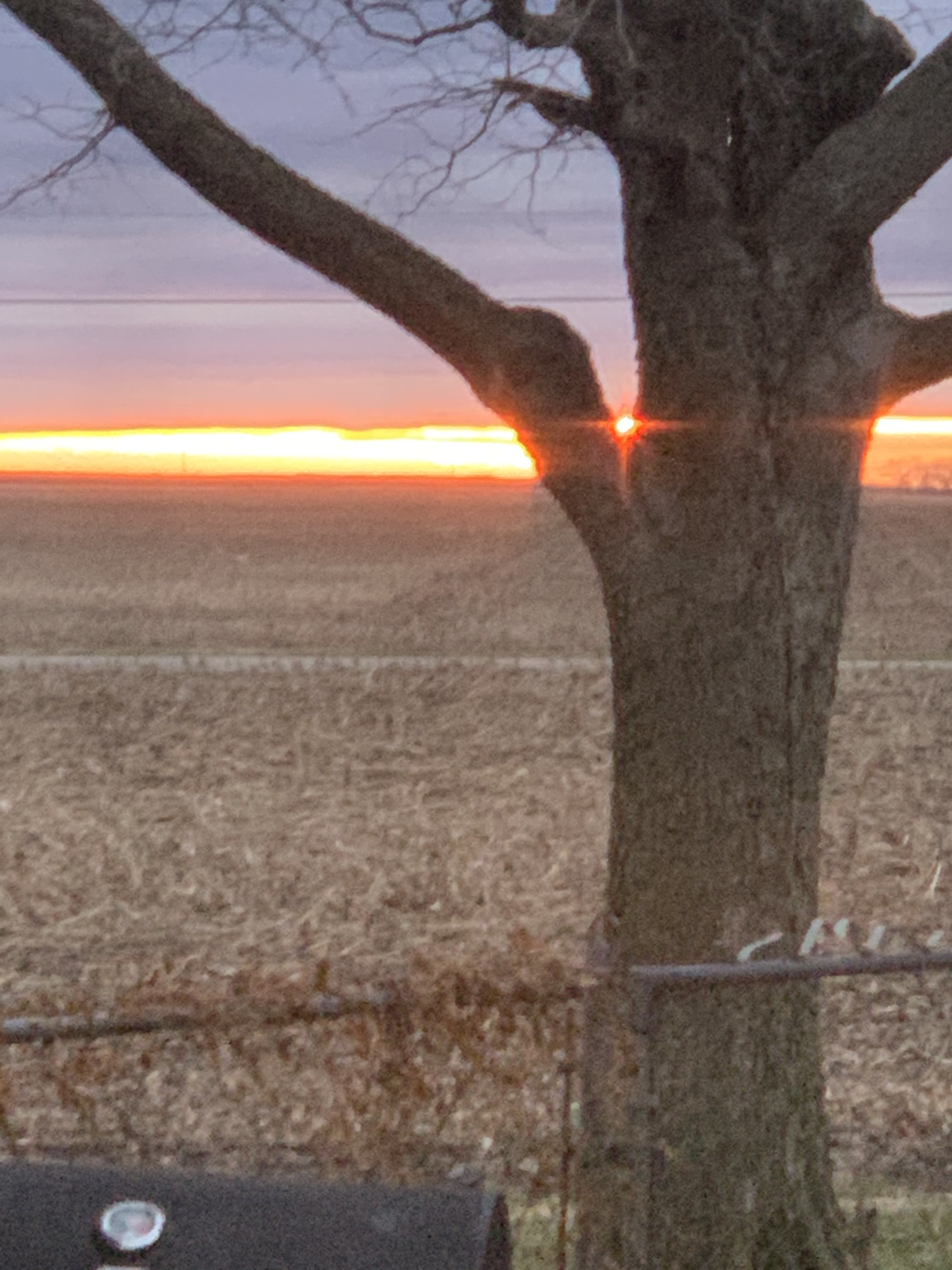
A day I’ll never forget. I was quietly starting my morning. I looked out my kitchen window to watch the sun rise, and suddenly the sun hit the branches on our tree and a big burning, blazing cross appeared! Seriously.

I stared at it for a few seconds in disbelief, and quickly tried to grab my iphone to take a picture but it went just as quickly as it came. I immediately felt God say to me “Something is coming, and I am in it.”

Boy, did it come. Larry and I have experienced so much pain these last couple years that left us broken. And some things are still too painful to share here.

After we lost Larry’s Dad at 58 years young, we both knew we had to start living the life we’ve dreamed of. We can’t wait until retirement. We realized life is short, and retirement is not guaranteed.

If you know us at all, you know we love the beach. We’ve always imagined living on the gulf coast someday.

“Something is coming, and I am in it.”

It’s a long story so I won’t share all of it here.
I recently saw a quote that said
“When things are falling apart, they may actually be falling together.”
That’s exactly what has happened for us. Prevenient Grace.

So when Larry was recently offered a position as one of the pastors at Grace Church in Cape Coral, Florida,
we knew we had to go. We will be moving in the next few months.

Everything that has happened over the last couple years was pointing to this. Every detail woven so intricately and all of the grief made good in only a way God can.

We’re grieving leaving family and friends, but we have so much peace. We can’t deny that God has called us here.
So please pray for us as we make this huge life transition. Pray for our girls as they adjust. We can’t wait to see what God has in store for us there!

Brittney captures this so well. “Something is coming, and I am in it.” When she told me this story back in March 2021, we had no idea what it could have meant. But looking back now, we can see prevenient grace at work so clearly. God was using the good experiences (Order of the Flame, the doctoral program, my friendship with Jorge) and the heartbreaking ones (the death of my dad and others we won’t share here) to open the door for this opportunity.

  • Without Order of the Flame, I don’t develop this friendship with Jorge.
  • Without developing a friendship with Jorge, I probably don’t join this particular doctoral cohort.
  • Without joining this cohort, I don’t get repeated exposure to the great things happening at Grace Church.
  • Without the past 5 years as Lead Pastor of Tremont, I don’t grow into the pastor and person I am right now.
  • And painfully, without my dad’s death, we’re not in a position to make the kind of down payment we needed to get our home.

So we said yes, trusting that “He is in it.” We’ve seen so much evidence of that, right down to how effortless it has been for me to feel part of the team at Grace. And God has continued to show off. In the whirlwind of saying yes, God has shown His faithfulness in countless ways:

  • Our families and friends have been so incredibly supportive.
  • My superintendent, while sad to see me go, couldn’t hide his excitement over this new opportunity.
  • We found a wonderful new construction home and are already under contract. For the first time in our lives, we’re going to be homeowners…in a home that no one else has occupied.
  • We have experienced such incredible peace every step of the way.

We’re grieving leaving Tremont, the Illinois Great Rivers Conference, and our proximity to some of our most important relationships…but we continue to trust that “He is in it.”

So, the Franks are on the move….pray for us!

Christmas in the Trenches

Christmas in the Trenches

“This is it. No turning back. Another Christmas in the trenches,” said young Kevin McCallister in Home Alone 2 just before he did battle with the same two thieves from the first movie. In both movies, the story is the same. Kevin has a falling out with his family and is subsequently forgotten or separated during the craziness of the family vacation departure. In the first movie he gets left behind at home while his family boards a flight to Paris. In the second, he gets separated from his father at the airport and ends up on a plane to New York with his family on a flight to Florida. In both movies he does battle against two thieves with an intricate set of booby traps. 

“Another Christmas in the trenches.” I think the line probably has more to do with the whole scenario rather than just the ensuing war with Harry and Marv. Sure Christmas in the trenches was the confrontation with the two most inept robbers ever, but it was also the isolation from his family emotionally and physically, being all alone at Christmas whether at home in Chicago or as a stranger in New York City. Christmas in the trenches was every bit as emotional and mental as it was the physical battle. 

My Christmas 2022 had me feeling a lot like Kevin. No, Harry and Marv didn’t show up. No, I didn’t have to set up traps (though, I have some ideas). My trenches were caused by things beyond my control that waged war against me and caused emotional and mental distress and a feeling of isolation. 

Here’s my tale. ‘Twas the night before Christmas Eve, when our family had to drive south to do our Christmas gatherings with extended family. The real feel temperature was something like -50 but we didn’t see another window to make this happen. So we braved the frozen tundra that was I-55 and made it with only minor emotional damage. We were at my grandparents house when I got a text from a church member who had gone to the building to shoot hoops with some neighborhood kids. As they gave a tour of the building to one of the neighbors, they discovered that our sanctuary was 55 degrees and falling. The choir room behind the sanctuary was heading toward sub 40. The sprinkler room in the basement had no heat running in it at all and was in pipes freezing territory. 

Phone calls were exchanged with the Head Trustee and a repairman was able to come out. The choir room seemed easy enough, the vent just had some ice in it. The temp in that room instantly began to rise. We decided the sanctuary was just struggling to catch up because it’s a large room and was set on a schedule; we’d override the schedule to get through the cold patch. The sprinkler room furnace was completely down and needed a new part that the repairman could get on Christmas Eve and install. WHOOOHOOO! Good news. Let’s move on with life. 

Except nothing happened the way we thought it would. 

On Christmas Eve morning, I went to check the temps. After being on the override schedule for over 12 hours, the sanctuary was still only 58. We needed it above 60 or we’d be looking at cancelling Christmas Eve services (which just seemed inconceivable to me). The choir room was indeed still coming up, so that was good. We got word from the repairman that the part for the basement furnace was not available. Bummer. 

What I thought would be a quiet day at home with my family and maybe a good nap before the marathon that is 3 Christmas Eve services turned into phone call after phone call, several trips back and forth monitoring the temperature. 

Our first service was to be at 4:30. I went up to the church around 2 to check temps again. This time, the sanctuary smelled like someone had ran a race car through. Burnt oil. I went to the choir room and heard the unmistakable sound of water hitting wet carpet. The sprinkler lines had frozen the day before, unbeknownst to us, and as they thawed when the room got back to a normal temperature, two of them popped. Did you know that sprinkler heads had oil in them? I didn’t, but that explained the smell. I called a member who is a firefighter and he said that I needed to shut down the sprinkler system immediately before there was an even bigger problem. I went to the basement sprinkler room and there were just way too many valves and levers and I had an image in my mind of turning one of those valves only to have water come exploding out and slam me against the wall….IT HAD BEEN A LONG DAY, OK?! I’m man enough to admit I didn’t have the guts to shut it down myself so I called another trustee who’s good with that kind of stuff. He came up to the church and was able to shut it down. This immediately set off the alarm in the building. So I had to get on the phone with the security company to place the alarm in test mode while we called the main sprinkler company to see if they could come out on Christmas Eve. 

Somewhere in the middle of all of that I get a text from Brittney that said, “We’re not coming to worship tonight, Evie spiked a fever again.” It seems like we’ve been tossing sicknesses back and forth for several weeks and can’t all seem to be healthy at the same time. Somehow I managed to dodge this round of flu by the sheer grace of God because Pastor’s CANNOT get sick on Christmas week. 

I remember thinking, “I’ve spent all day away from my family, it’s cold in here, the sprinkler heads are leaking and I’ve got to preach 3 times! This is not what I thought today would be!” I even said out loud to one of the trustees, “Christmas in the trenches,” channeling my inner Kevin. I was waging a battle not against flesh and blood, but against powers of nature beyond my control in sickness and bitter cold. And I was fixing to say Bah Humbug to the whole thing. 

Then I got a text from another church member. “I have been praying for you all week. I know today will be exhausting for you and will take you away from family for most of the day. Thank you for all you do to serve others selflessly on this day.”

Remember when the grinches heart grew two sizes? That’s exactly what happened to me. We were going to figure out the heat and get people in the Church to worship and it was going to be awesome!

An emergency crew came from over an hour away to fix the sprinkler system and alarm. They were incredible guys, working around our Christmas services the busyness in the building. The sanctuary temp came up to 67 which is just about where we keep it on a Sunday morning. 

People started flooding into the building. Eager to celebrate Christmas Eve. But I was still exhausted. I missed my family. I wanted to do my preacher thing, but I didn’t know if I had anything left in the tank after a Christmas in the trenches. 

Then the lights went down and the video opener started. It was a video I had made with one of our teens. We took the concept from another church that had done it years ago, but she made it her own!

How can a whole world be waiting and not even know it?

As God’s creating the perfect plan and just waiting to show it. 

A star hung in the sky and just below it the most unlikely gift. 

Given in a most unexpected way. 

The fullness of God laying in hay….a day that changed everything. 

A virgin girl giving birth to a boy, no….a king. 

And they bring him gifts of gold…sing him praise, extolled him because he displays the answers to prophecies foretold before his days….he has come. 

Let it be known, little boy play your drum, pa rum pum pum pum, let it be shown the Son of God is here. 

Draw near to his people so incline your ear to hear the good news.

A baby boy laying in a manger. A mere stranger to this earth would save us from the danger of our sin but it started at his birth, he birthed hope into this world and proved to us our worth. 

This infant…worth more than prizes offered by kings because simply in coming he offered us everything. 

And we don’t just remember what was, but celebrate Him. 

Distinctly one, yet distinctly three, most holy. 

King of glory, lamb of God, Redeemer, friend, first and last, alpha and omega, light of the world, Prince of Peace, Lord of Lords, King of Kings, name above all names. Messiah. Savior. Promise fulfilled. Emmanuel. God with us. Bright and morning star, the great I am…You ARE the Christ. 

The giver of life, He is Jesus. And he has come

That’s when I had a thought. Yes, it had been a Christmas in the trenches. But Emmanuel was with me in the trench. He was right alongside me fighting the battles, there in my feelings of isolation and exhaustion, and He was certainly with my sick baby and family at home. 

As we prepared to light candles, I relayed a bit of this story to the folks that had gathered at each of the three services to demonstrate the coming of our Christ…that light shines in the darkness and the darkness has not overcome it!

Christmas has always been in the trenches. It has always been messy. 

Max Lucado captures this perfectly in God Came Near:

“The stable stinks like all stables do. The stench of urine, dung, and sheep reeks pungently in the air. The ground is hard, the hay scarce. Cobwebs cling to the ceiling and a mouse scurries across the dirt floor. A more lowly place of birth could not exist… (This is)… Majesty in the midst of the mundane. Holiness in the filth of sheep manure and sweat. Divinity entering the world on the floor of a stable, through the womb of a teenager and in the presence of a carpenter.”

Christmas has always been in the trenches. It has always been messy. But that’s what makes Christmas so great. We’re always in the trenches. We’re pretty messy. And Jesus enters right into that mess and says, “I’m here. Let’s do this together.”

So I know it’s a couple of days after Christmas Day, but as my more liturgically-minded friends would remind us, Christmas isn’t over until the Magi show up on January 6. So no matter what your trench is, no matter how messy it all feels, remember that He is STILL Emmanuel, God-with-us. 

The light shines in the darkness and the darkness has not overcome it. Merry Christmas, indeed. Especially to those down in the trenches.