We’ve all been navigating a new ministry reality in the midst of COVID19 precautions. I never thought that I would cancel worship for a non-weather related incident. Yet here we are, no worship this week or next….and likely beyond that. There’s plenty of ministry to be done. My refrain this week has been “we may not be able to meet AT church but there’s plenty of opportunity to BE THE CHURCH.” I’ve read plenty of offerings from others on how to do ministry in this new weirdness we’re experiencing. And we’re all doing our best to do that…50 plates spinning and maybe a couple going well.
Much has been made about the need for continued faithful giving to local churches during a shut down. This is very true. Just because we’re not meeting in the building does not mean that the ministries of the Church aren’t ongoing, in fact, many churches are doing more now than they have in years. I’d be lying if I said I wasn’t concerned about the financial impact this may or may not have on my local church. I’m letting my folks know how important their continued faithfulness is giving is during this time. And it all matters. Keep up your regular giving. If you’re not giving, give something. If you’re getting hit financially, trust God and still give something. Every dollar counts. Especially if you’re blessed enough to be able to give above and beyond your regular tithe, do it!
But I think there will still be an impact and there are practical things that local churches can do to better steward their resources during this time. Cutting unnecessary spending is definitely going to help. I’ve instructed my staff to not make any purchases that can wait for later.

It occurred to me on Monday, though, that one of the high cost areas for most local churches (without even thinking about it) is energy consumption. And many of us don’t consider the fact that even items that are “off” or “idle” still draw electricity. According to a 2015 study by the National Resources Defense Council, about 25% of residential energy consumption is from devices that are in idle or standby mode. I don’t know about you, but a 25% reduction in my home electric bill is nothing to turn my nose up at. I imagine that the same could be said for local churches.
One of my staff and I walked our entire campus this week. There were a ton of things that we could adjust to save on energy consumption, especially while the building is unoccupied. I was amazed at how many things were on or at least plugged in. So we made some changes in the hopes of being better stewards of our resources (financial and otherwise). I offer some practical tips for other local churches to consider:
- Many thermostats are scheduled based around the church activity week. If your building is locked down right now, set them all to unoccupied. We’ve set all of the thermostats in our building except for our main office to reflect the emptiness of the building.
- Essential staff are working, but can you do without overhead lighting in your office? I’ve got a good bank of windows behind my desk, and even though its stormy today, it’s enough light to work by.
- Unplug EVERYTHING non-essential. This was the biggest one for us. We consolidated mini-fridge items and unplugged the empty ones. We unplugged lamps and stereos and microwaves and coffee makers and televisions. Did you know that if you never even turned on your tv at home, your cable box still consumes more energy in a year than the average person in Kenya or Cambodia does? Aside from your copy machine and regularly used desktop computers, most office equipment can be unplugged too. The paper folder, shredder, laminator, etc. can be plugged when/if we need them. The number of charging cables plugged in to nothing shocked me, too. Don’t forget to check unused kitchen appliances, as well. Just because it’s not in use doesn’t mean it’s not drawing electricity.
- Lights on timers for your interior or exterior? Don’t need those right now.
- Check your water heater. Does it need to be turned up “that high” right now?
- I’m sure there are more, but these seem to be the most practical at this moment.
These are things that we let slide in regular situations. Maybe we shouldn’t. Maybe we should always be this vigilant as we steward our financial and natural resources. But especially right now when many of us are preparing for a pinch, take a few moments and do a walkthrough.

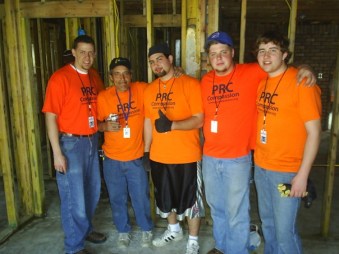 We had Sunday worship right there in the middle of that parking lot. We filled boxes with food and gave out clothing. We went out from the parking lot and gutted houses, trying to help people rebuild some of the dreams that were broken by the storm. In so many ways, the entire operation happened because Pastor Randy asked “What do I do after the storm?” After his moment of licking his wounds, he got right back to the important work he was doing before the storm: building God’s Kingdom, preaching the Gospel of Jesus Christ, reaching out to those who were lost and hurting and broken.
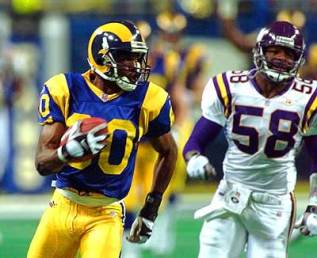 But I remember…I remember the Greatest Show on Turf! I remember sitting in these seats watching my heroes tear up the opposition all the way to the Superbowl! Warner! Faulk! Holt! Pace! BRRRRRUUUUUCCCCCEEEEE! The playoff game against Minnesota en route to the Superbowl was the loudest I’ve ever heard any building. The ground shook as we cheered for our boys. My dad and I couldn’t hear each other speak during the car ride home.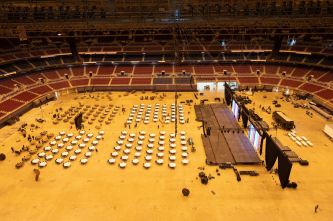


 The Illinois Great Rivers Conference has been assigned the week of January 22-28. I, along with many others throughout the conference will have set aside times of prayer during that week for the Church that we love. At the local Church where I serve, we are setting aside time during our Sunday worship services and Tuesday Eucharist service to pray for our Church and the work of the commission. Further, the sanctuary of our Church will be open each day for any wishing to come and cover the process in prayer.
 I don’t agree with Dave Ramsey theologically on a few things, and there are a couple of things in his process that I don’t fully embrace. However, on the whole, his plan works. You can check it out for yourself
  So it’s somewhat disappointing to know that this Biblical and Wesleyan exercise is not practiced widely in our church. Wesley himself recommended fasting and abstinence as a means of grace by teaching and pattern. Wesley often fasted once per week from sundown on Thursday through late afternoon/early evening on Friday’s.
 between him and the children. Second he teaches them that we should all receive God’s Kingdom with the heart of a little child. Yes, children make me nervous, I can admit that. But I will instruct them nonetheless because I love them and want to share God’s love with them. I have tried to insert myself into more and more situations where ministry to children is the focus.
 Rev. Dr. Larry Frank